
Wheel Blocks
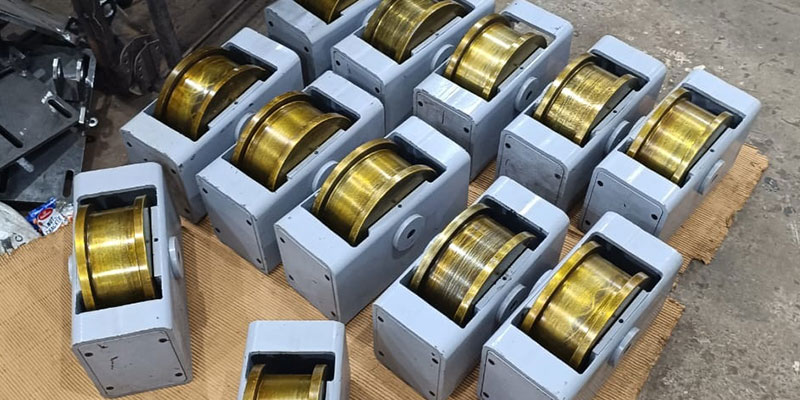
Wheel blocks in cranes are vital load-bearing components that support crane movement and ensure stable, controlled travel along rails. They are used in overhead cranes, gantry cranes, and portal cranes, where they house the crane wheels, bearings, and axles in a compact, rigid assembly. A well-designed wheel block crane system helps distribute loads evenly, reduce wear on rails, and improve overall crane reliability.
The primary function of a wheel block crane is to support vertical and horizontal loads generated during lifting, trolley travel, braking, and acceleration. Wheel blocks transfer these forces from the crane structure directly to the runway rails or ground tracks. They also maintain accurate wheel alignment, which is essential for smooth crane travel and to prevent skewing, rail damage, or excessive vibration during operation.
Wheel blocks are typically manufactured from high-strength steel or cast steel to withstand heavy loads and continuous duty cycles. Each wheel block includes key components such as crane wheels, roller or spherical bearings, axles, seals, and sometimes buffers. These parts are precision-machined to ensure correct fitment and long service life. Depending on the crane capacity and span, wheel blocks may be designed for single-wheel or double-wheel configurations to achieve better load distribution.
There are different types of wheel blocks used in crane systems. Fixed wheel blocks are mounted rigidly to the crane structure and are commonly used where alignment is stable and predictable. Floating or articulated wheel blocks allow slight lateral movement, helping compensate for rail misalignment and thermal expansion. This design reduces stress on crane structures and improves wheel and rail life, especially in long-span cranes.
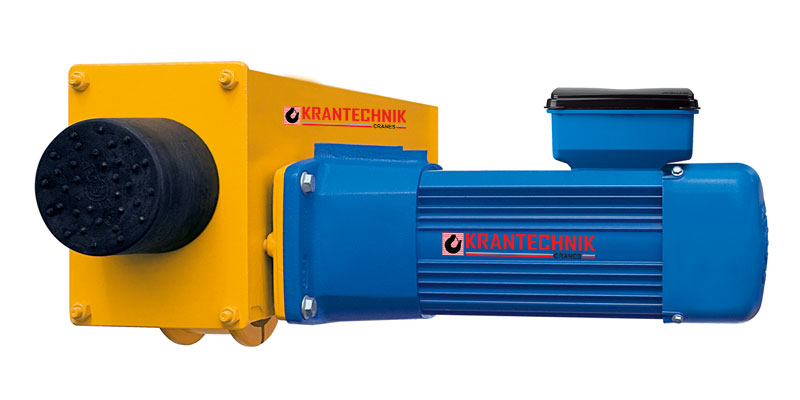
Wheel block crane assemblies can be driven or non-driven. Driven wheel blocks are connected to motors and gearboxes to provide crane travel motion, while non-driven wheel blocks support the structure and guide movement. In heavy-duty cranes, multiple driven wheel blocks may be used to ensure balanced traction and smooth acceleration, even under full load conditions.
Proper selection of wheel blocks depends on several factors, including crane capacity, wheel load, rail size, operating speed, duty classification, and environmental conditions. Outdoor cranes may require wheel blocks with corrosion-resistant coatings and sealed bearings to protect against dust, moisture, and temperature variations. Indoor applications may focus more on precision and low-noise operation.
Regular inspection and maintenance of wheel block crane systems are essential for safe and efficient operation. Checking wheel wear, bearing condition, axle alignment, and lubrication levels helps prevent unexpected failures and costly downtime. Modern wheel block designs often feature modular construction, allowing quick replacement and easier maintenance. By ensuring stable crane travel and reliable load transfer, wheel blocks play a crucial role in the performance, safety, and longevity of any crane system.