
End Carriages
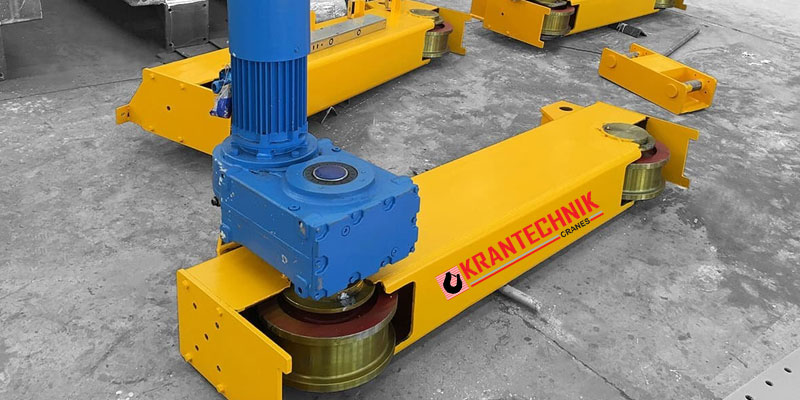
An end carriage crane is a critical structural and mechanical component used in overhead cranes, bridge cranes, and gantry crane systems. It is mounted at both ends of the main bridge girder and plays a key role in enabling smooth crane travel along the runway rails. The end carriage supports the bridge structure, carries the wheel assemblies, and transfers the crane load safely to the crane runway beams. Without a well-designed end carriage, crane movement would be unstable, inefficient, and unsafe.
The primary function of an end carriage crane is to provide controlled horizontal motion of the crane bridge. It consists of wheels, wheel axles, bearings, buffers, and often a geared motor or drive system. These components work together to ensure accurate alignment, smooth travel, and reduced vibration during crane operation. Depending on the crane capacity and span, end carriages can be designed as single-wheel or multi-wheel arrangements to distribute loads evenly and reduce stress on rails and structures.
End carriages are usually fabricated from high-strength structural steel to handle heavy loads and repetitive duty cycles. Precision machining and proper alignment are essential, as even minor deviations can lead to uneven wheel wear, rail damage, or increased power consumption. Modern end carriage crane designs often include anti-skew mechanisms, flexible couplings, and precision gearboxes to improve travel accuracy and extend service life.
There are different types of end carriages based on crane configuration and application. Single girder cranes typically use compact end carriages with lighter wheel loads, while double girder cranes require heavier, more robust end carriages capable of handling higher capacities and wider spans. In gantry and semi-gantry cranes, end carriages are designed to operate on ground rails and may include additional features such as rail sweeps and storm brakes for outdoor use.
Proper selection of an end carriage crane depends on factors such as crane capacity, span length, duty classification, operating environment, and runway design. Regular inspection and maintenance are equally important. Lubrication of bearings, checking wheel alignment, and monitoring wear patterns help prevent breakdowns and ensure reliable crane performance over time.
In modern industrial facilities, end carriages are increasingly designed with modular construction, allowing easier installation, replacement, and upgrades. This improves downtime management and overall crane efficiency. A well-engineered end carriage crane not only enhances smooth crane travel but also contributes significantly to operational safety, structural stability, and long-term cost savings for material handling systems.